




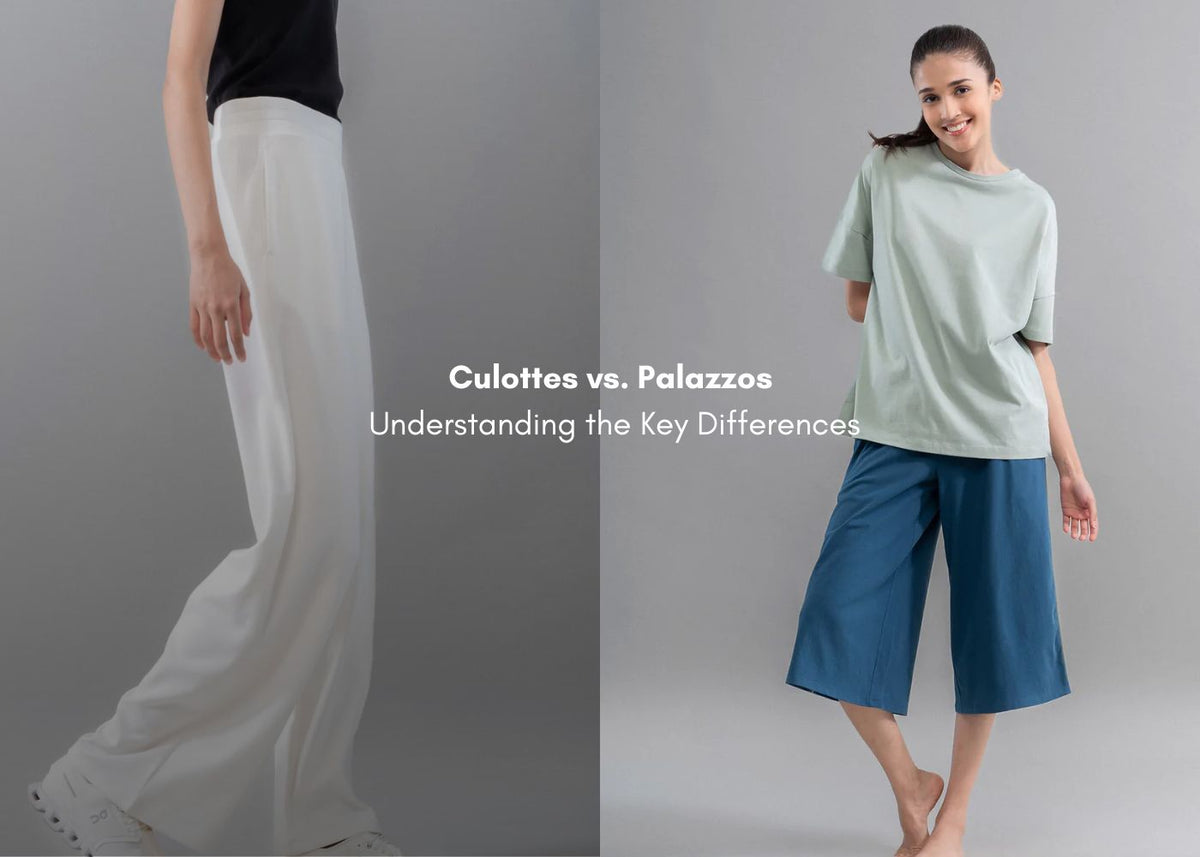
Culottes vs. Palazzos: Understanding the Key Differences
Ever found yourself standing in a dressing room, wondering if those wide-leg bottoms you're trying on are culottes or palazzos? You're not alone in this fashion confusion.
The short answer: culottes are wide-leg pants cropped between the knee and mid-calf, with a structured A-line shape that looks like a skirt when you stand still. Palazzo pants are full-length, very wide-leg trousers that fall straight to the ankle or floor in a soft, flowing drape. Length and structure are the two differences that change how you style each one.
Culottes vs Palazzos at a Glance
|
Feature |
Culottes |
Palazzos |
|
Length |
Knee to mid-calf |
Ankle to floor |
|
Leg shape |
A-line flare from the hip |
Wide from hip to hem |
|
Structure |
Semi-structured, holds its shape |
Fluid and drapey |
|
Typical fabrics |
Cotton, denim, wool blends, modal blends |
Silk, rayon, crepe, jersey, modal |
|
Waistline |
Often high-waisted |
High or natural waist |
|
Formality |
Casual to business casual |
Casual to formal |
|
Name origin |
French "culotte" (knee breeches) |
Italian "palazzo" (palace) |
|
Best for |
Everyday wear, office, travel |
Evenings, festive wear, hot days |
What Are Culottes? Meaning and Origin
Culottes are wide-legged bottoms that end anywhere from just below the knee to mid-calf. They have a structured A-line silhouette that flares gently from the waist or hip, so they often look like a skirt when you are standing still and work like trousers when you move. Pleats, crisp hems and defined waistbands help them hold that shape.
The word comes from French. "Culotte" originally meant knee-length breeches, and it is related to "cul", the lower part of something. In English, a culotte is a cropped, wide-leg trouser, also called a split skirt or divided skirt. In modern French, though, "culotte" also means women's knickers, so if you are translating the word, the context matters. In English the word is pronounced "koo-LOTS".
You will see the same garment sold as culotte pants or culotte trousers. Shorter versions that end above the knee are called culotte shorts, and denim versions are sold as culotte jeans.
A Short History of Culottes
Culottes began as knee-length breeches worn by European aristocrats. During the French Revolution, working-class revolutionaries were nicknamed "sans-culottes", literally "without culottes", because they rejected that aristocratic dress. Women adopted culottes in the late 19th and early 20th centuries as practical garments for cycling and horse riding, activities that long skirts made difficult.
By the 1930s, culottes had become a fashion statement. In 1931, Spanish tennis player Lilí Álvarez played at Wimbledon in a divided skirt designed by Elsa Schiaparelli, a turning point for women's sportswear. Today they are an everyday staple, and there are plenty of ways to style culottes from office to weekend.
Related Reading: Exploring the Different Types of Bottom Wear for Women
What Are Palazzo Pants? Meaning and Origin
Palazzo pants are full-length trousers with extremely wide legs that stay the same width from hip to hem and reach the ankle or floor. They are usually made from light fabrics, so the legs move as you walk and the overall shape is fluid rather than structured.
"Palazzo" is the Italian word for palace. The style became popular in the 1960s and 1970s; in 1960, Italian designer Princess Irene Galitzine launched her "palazzo pyjamas", wide silk trousers worn for elegant evenings. In the UK they are often called palazzo trousers, in India they are commonly written as "plazo", and they are sometimes mistakenly searched for as "piazza pants".
Culottes vs Palazzos vs Gauchos
Gaucho pants are the third wide-leg style people often confuse with these two. Gauchos are named after the wide trousers worn by South American horsemen.
|
Feature |
Culottes |
Palazzos |
Gauchos |
|
Length |
Knee to mid-calf |
Ankle to floor |
Mid-calf |
|
Leg shape |
A-line flare from the hip |
Wide from hip to hem |
Wide, cropped straight at the hem |
|
Feel |
Structured, skirt-like |
Soft and flowing |
Casual, often worn with boots |
|
Typical footwear |
Sneakers, mules, ankle boots |
Heels, platforms, flat sandals |
Ankle boots, flats |

The quickest way to tell palazzo pants from gauchos is length: palazzos reach the floor, gauchos stop at mid-calf. Culottes and gauchos are close cousins; culottes usually have the stronger A-line flare.
What Are Pants That Look Like a Skirt Called?
Pants that look like a skirt are usually culottes. Their wide A-line legs hang together when you stand still, which is why they are also called a split skirt or culotte skirt. Other trousers that look like a skirt include:
• Palazzo pants: so wide and long that they can read as a maxi skirt when you walk.
• Gaucho pants: mid-calf and wide, similar to a midi skirt.
• Skorts: shorts with a fabric panel across the front, so they look like a mini skirt.
"Skirt pants" is a general shop term that can cover any of these, so check the length and leg shape in the product description.
Types of Wide-Leg Pants
Culottes and palazzos are two of several types of wide-leg pants. These are the names you will see most often, and what sets each one apart.
|
Name |
Length |
Leg shape |
Best for |
|
Palazzo pants |
Ankle to floor |
Very wide from hip to hem |
Evenings, festive wear, hot weather |
|
Culottes |
Knee to mid-calf |
A-line flare |
Everyday wear, office, travel |
|
Gaucho pants |
Mid-calf |
Wide, cropped straight |
Casual wear with boots |
|
Wide-leg trousers |
Full length |
Wide but tailored, often with a pressed crease |
Office and formal wear |
|
Flared pants |
Full length |
Fitted through the thigh, flaring below the knee |
Lengthening the leg |
|
Wide-leg jeans |
Full length |
Straight and wide in denim |
Casual everyday wear |
|
Wide-leg travel pants |
Full length |
Relaxed and wide in soft knit fabrics |
Flights, road trips, long days |
Which Suits Your Body Shape?
Understanding the difference between culottes and palazzos helps you choose the style that complements your proportions. Fashion should always be about what makes you feel confident, but some silhouettes naturally balance certain shapes.
Height
Petite frames (under 5'4"): Culottes that end just below the knee usually lengthen the leg more easily than palazzos, because the ankle stays visible and no extra fabric pools at the floor. If you prefer palazzos, choose a high waist and hem them so they just touch the top of your shoe.
Taller frames (5'8" and above): Floor-length palazzos balance a tall frame and create a strong vertical line. Very short culottes can look unintentionally cropped, so mid-calf lengths work better.
Body Shape
|
Body shape |
Culottes |
Palazzos |
|
Pear / triangle |
The A-line skims the hips and draws attention to the narrowest part of the leg. Choose a flat waistband that doesn't add bulk. |
Choose styles that fall from the widest part of the hip without extra gathering. |
|
Apple / round |
High-waisted styles with soft pleats define the waist and stay comfortable. |
The long, flowing line elongates the silhouette. Look for a gentle, non-gathered waist. |
|
Rectangle / athletic |
Volume at the leg creates the look of curves. |
Adds softness and movement to a straighter frame. |

Styling Culottes and Palazzos from Day to Night
|
Occasion |
Culottes |
Palazzos |
|
Morning coffee run |
Soft t-shirt, white sneakers and a crossbody bag |
A simple tank in a complementary colour and easy sandals |
|
Office |
Tucked-in blouse, structured blazer, low block heels |
Fitted button-down knotted at the waist and structured accessories |
|
Evening event |
Silk cami, statement earrings, heeled sandals |
Cropped top or bodysuit, platform heels, statement jewellery |
In India, palazzos are also a classic partner for a kurta or kurti: the wide leg balances a long top and stays cool in the heat. In the monsoon, culottes are the more practical choice, because the cropped hem stays clear of puddles.
Culottes and Palazzos Through the Seasons
Spring: Culottes show off transitional shoes like mules and ankle boots. A little stretch in the fabric helps you move comfortably as temperatures change. Palazzos in light, breathable fabrics start to shine as the weather warms.
Summer: Both styles keep air moving around the legs, prevent the thigh chafing that shorts can cause, and protect your skin from the sun. Choose light natural or modal fabrics that breathe.
Autumn: Layer culottes with tights and ankle boots, and switch to heavier fabrics. Pair medium-weight palazzos with fitted tops to balance the volume.
Winter: Wear culottes with tall boots, thermal tights and longer coats. Choose lined or heavier palazzos, keep hems slightly shorter to avoid wet streets, and style them with fitted sweaters.
Related Reading: Which Fabric is Better for Indian Summers?
Why Palazzo Pants Work So Well in Hot Weather
Airflow: The very wide legs leave space between fabric and skin, so air circulates as you walk instead of heat being trapped against your body.
Breathable fabrics: Palazzos are usually made from light materials such as rayon, silk, cotton or modal. Modal is soft, breathable and absorbs moisture well, which helps you stay comfortable in humid weather.
Coverage without overheating: You get full sun protection on your legs without fabric clinging to your skin. If you want a slimmer option, there are also relaxed trousers and other everyday bottoms in breathable fabrics.
Movement: Every step moves the fabric and creates its own light breeze, which is why palazzos feel cooler than their full length suggests.
How Fabric Changes the Way They Look
|
Fabric characteristic |
Effect on culottes |
Effect on palazzos |
|
Structure |
Keeps the A-line shape |
Can look stiff or bulky |
|
Drape |
Too much drape collapses the shape |
Creates the signature flow |
|
Weight |
Medium weights work best |
Light to medium is ideal |
|
Stretch |
A little elastane helps movement |
Minimal stretch keeps the flow |
|
Opacity |
Important for a clean shape |
Light colours may need a lining |
Palazzos use more fabric than culottes because the legs are both longer and wider, which affects how they drape, how much they weigh and often what they cost.
What to Wear Under Culottes and Palazzos
Light, flowing fabrics show underwear lines more easily than structured trousers. A seamless or bikini-cut panty in a skin tone keeps the line smooth under light colours, while a hipster or boyshort cut gives extra coverage when wide legs catch the breeze. If you are unsure which cut to choose, this guide to the main types of panties explains how each one fits.
Culottes vs Pajama Bottoms: What Is the Difference?
If you have ever thought culottes look like smart pajama bottoms, you are not alone. Both are loose and comfortable, but they are built for different jobs.
|
Feature |
Culottes |
Pajama bottoms |
|
Purpose |
Daywear, indoors and out |
Sleep and lounging at home |
|
Silhouette |
Structured A-line that holds its shape |
Relaxed and unstructured |
|
Typical fabrics |
Cotton, denim, twill, wool blends, crepe |
Modal, soft cotton, jersey, flannel |
|
Waistband |
Defined, often high-rise with a zip or button |
Elastic or drawstring |
|
Length |
Knee to mid-calf |
Ankle length or cropped |
|
Footwear |
Mules, heels, ankle boots, sneakers |
Slippers or barefoot |

The simplest test is the waistband and fabric weight. If it has a structured waistband and holds its shape on a hanger, it is a culotte. If it collapses into a soft pile when you take it off, it is a pajama bottom.
Conclusion
There is no universally better option between culottes and palazzos, only the one that fits your day. Culottes give you versatility: a knee-to-calf length that shows off your shoes, a structured shape that moves easily between casual and office settings, and a moderate volume that suits anyone new to wide-leg styles. Palazzos give you drama and ease: a floor-grazing length, a long vertical line and flowing fabric that turns a simple outfit into a statement. Many wardrobes have room for both, using culottes for everyday wear and palazzos for evenings and hot days.
FAQs
What is the difference between palazzo and culottes?
Palazzos are floor-length with consistently wide, flowing legs, while culottes end between the knee and mid-calf with a more structured A-line shape. Palazzos create movement and lengthen the silhouette; culottes are more versatile and show off your footwear.
What is the difference between palazzo and wide-leg pants?
Palazzo pants are one type of wide-leg pant, defined by an extremely wide cut and flowing drape from hip to hem. All palazzos are wide-leg pants, but not all wide-leg pants have the volume and floor-skimming length of true palazzos.
Can petite women wear palazzo pants?
Yes, petite women can wear palazzo pants. Choose high-waisted styles, hem them so they just touch the top of your shoe, and add a heel or platform. Wearing one colour from top to bottom also creates a longer, unbroken line.
Which is better for travel, culottes or palazzos?
Culottes are usually better for travel because they pack smaller, crease less and stay clear of dirt on the hem. Palazzos in crease-resistant fabrics are a comfortable choice for long flights and easily move from day to evening at your destination.
How do you pronounce culottes?
Culottes is pronounced "koo-LOTS" in American English and "kyoo-LOTS" in British English, with the stress on the second syllable. The word comes from French, so the final "es" is silent.
Are palazzo pants and piazza pants the same thing?
Yes, "piazza pants" is a common mix-up for palazzo pants. Both names describe full-length trousers with very wide, flowing legs. The correct term is palazzo, the Italian word for palace; a piazza is an Italian town square.
What shoes go with palazzo pants?
Heels, wedges and platform sandals work best with palazzo pants because they lift the hem and lengthen the leg. For everyday wear, flat sandals or kolhapuris suit cotton and modal palazzos. Avoid chunky sneakers with floor-length styles, because the wide hem can catch on them.
How should I care for wide-leg pants?
Follow the care label, wash in cold water and avoid high-heat drying. Fold rather than hang knit styles to prevent stretching, and steam instead of ironing where possible to keep the shape and fabric looking new.